La Crosse
3143 State Road Suite 100, La Crosse, WI 54601

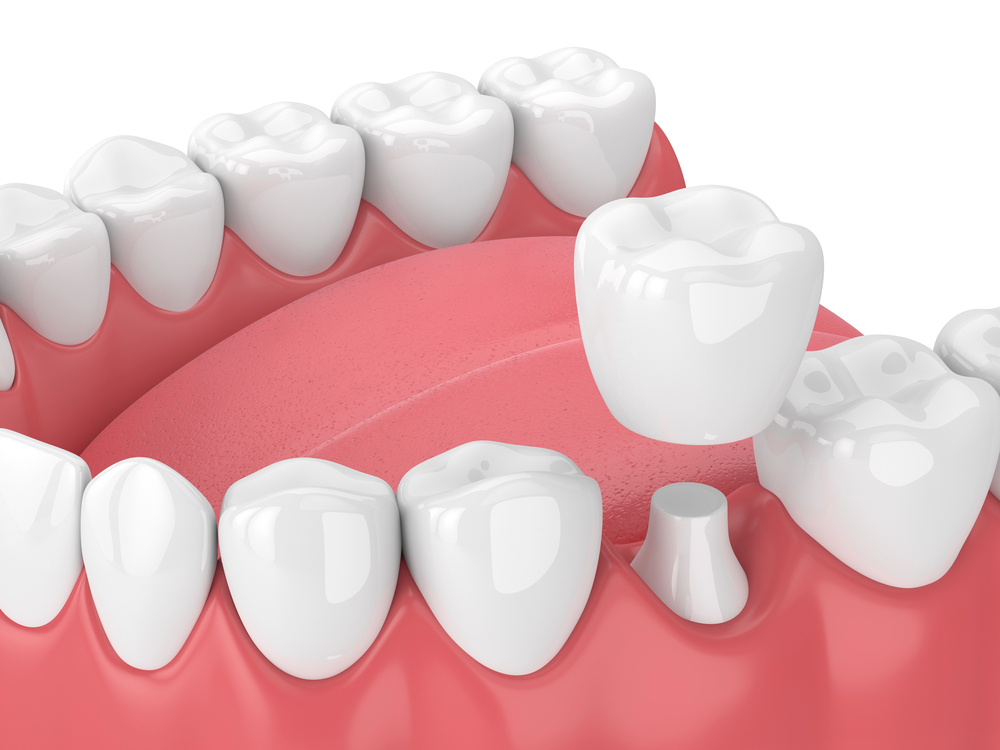
A gap from a single missing tooth does more than change your smile. Over time, the teeth on either side can drift toward the open space, and the tooth above or below it can shift as well, which may change how you bite and chew. At Rivertown Dental, we help patients across Wisconsin's Coulee Region close those gaps with dental bridges. We do this from our offices in La Crosse, Holmen, Arcadia and Viroqua, with our primary office in La Crosse.
A dental bridge is a fixed restoration that replaces one or more missing teeth by "bridging" the space between healthy anchor points. In a traditional bridge, the teeth on either side of the gap are prepared and fitted with crowns. Those crowns hold a replacement tooth, called a pontic, that sits where the missing tooth used to be. Because the whole piece is bonded in place, you do not take it out at night the way you would a removable partial denture.
Bridges help a wide range of patients. Some have lost a tooth to an injury. Others had a tooth extracted after decay or a cracked filling, and some have been living with a gap for years. We see adults of every age who want to chew more comfortably on both sides again or who simply want their smile to look complete. We also see patients who are weighing several tooth replacement options and want an honest explanation of each one.
Choosing a bridge usually comes down to the health of the neighboring teeth, the gums and the bone in the area. During your exam, our general dentists use digital X-rays to look at the teeth that would support the bridge. We also check for gum disease, since healthy gums give a restoration a better foundation. If we find a cavity or gum inflammation, we may recommend treating it first.
When the teeth beside the gap are healthy and you would rather not have them reshaped, we may talk with you about an implant-supported bridge. We place and restore dental implants in-house, and we provide fixed implant-supported bridges. This option can replace several teeth in a row without relying on neighboring teeth for support. We will walk through the pros and trade-offs of each approach so the decision is yours.
Many adults with one or more missing teeth and healthy neighboring teeth are good candidates for a bridge. Common situations we see include:
If you feel nervous about dental work, tell us. We offer nitrous oxide sedation, and IV sedation is available for adults. Our team also follows The Ascent Experience: advanced care, genuine comfort, and a better experience from start to finish. You will find small comforts like a warm towelette, a blanket, a support pillow, headphones and essential oils. You will also get clear explanations and no judgment about how long it has been since your last visit.
You care for a bridge much like your natural teeth, with a little extra attention underneath the replacement tooth. Brush twice a day and clean under the pontic every day. A floss threader or similar tool can help, because food and plaque collect in that space and can affect the supporting teeth and gums.
Regular cleanings and exams with our hygienists let us check the bridge, the anchor teeth and your gums over time. How long a bridge serves you depends on your home care, your bite and your overall oral health. If you grind your teeth at night, we may suggest a night guard to help protect your restoration. If a bridge ever feels loose or uncomfortable, call us so we can take a look.
We work with many dental insurance plans, so please call your office to confirm how your coverage applies. We also welcome self-pay patients. For patients without insurance, our Rivertown Membership Plans, also called the VIP Program, include Classic, Deluxe and Kids plans. They cover cleanings, exams, X-rays and fluoride, plus a discount on treatment. Membership plans cannot be combined with insurance.
If you would like to spread out the cost, we offer third-party financing through Cherry, CareCredit and Proceed Finance, subject to approval by the lender. Our team can explain your estimate and help you understand each option before treatment begins.
The first step is a visit so we can examine the gap and talk through your choices. Because our general dentists, hygienists and on-site dental lab all work together under one roof, families from La Crosse, Holmen, Onalaska, West Salem, Arcadia, Whitehall, Viroqua, Westby, Shelby and nearby towns can keep their care close to home. Call the Rivertown Dental office nearest you to schedule a consultation. We look forward to helping you smile and chew with confidence again. Dentistry, Done Differently.
Questions
The cost of a bridge depends on how many teeth it replaces and the condition of the teeth that support it, so we give you a clear estimate after your exam at any of our Coulee Region offices. We work with many dental insurance plans; call your office to confirm your coverage, and if you don't have insurance, ask about our Rivertown Membership Plans (VIP Program). We also offer third-party financing through Cherry, CareCredit and Proceed Finance for patients who qualify.
Most patients feel pressure rather than pain, because we numb the area thoroughly before preparing the supporting teeth. For extra comfort, we offer nitrous oxide sedation, and IV sedation is available for adults who feel anxious about dental work. Small touches like warm towelettes, blankets, headphones and essential oils help many patients relax in the chair.
A bridge usually takes more than one visit: one to prepare the supporting teeth and take impressions, and another to fit and adjust the finished bridge. We typically place a temporary bridge in between so you can eat and smile comfortably. Your dentist will walk you through the timeline that fits your situation before you begin.
With good daily care and regular checkups, a bridge can serve you well for many years, though no restoration lasts forever. Brushing, cleaning under the bridge and keeping up with your cleanings and exams help protect the supporting teeth and gums. We check your bridge at each visit so small issues can be addressed early.
A bridge can be a good option if you're missing one or more teeth and have healthy teeth on either side to support it. Because we place dental implants in-house, including fixed implant-supported bridges, we can talk through both choices with you at your exam. Our goal is to explain the pros and cons clearly, with no judgment about how long it has been, so you can choose what feels right for you.